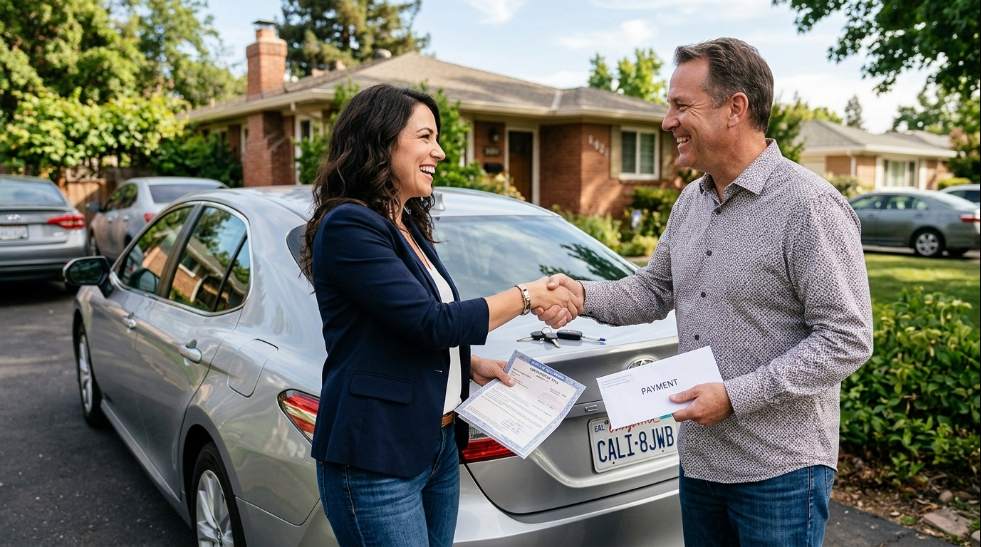
How to Negotiate the Best Price When Selling Your Car
Post by webuycars on 31 July 2026
Every private car sale eventually comes down to one moment: a buyer names a number, and you have to decide how to respond.
Get that moment right, and you can sell your car today at a fair price. Get it wrong, and you either lose the sale or leave money on the table. Knowing how to negotiate a used car price comes down to preparation, not being pushy, and it starts well before the conversation does.
The Golden Rule: Know Your Number Before Anyone Calls
Before you list your car, work out three numbers: a realistic value, the lowest price you'd accept, and an asking price that leaves you room to move.
Buyers expect some back and forth, so pricing yourself into a corner with no negotiating space almost always works against you.
Set Your Asking Price Strategically
Used car price negotiation starts well before you get your first call; it starts with how you set the price. Set your price a little above your floor, usually 5–10% higher, so there's something for the buyer to feel good about when you meet in the middle.
Round numbers ($15,000) tend to signal a firmer, less negotiable price than a specific figure ($14,850), which can work in your favour if you want to hold your ground. If you're not sure where your number should sit in the first place, checking what your car is worth gives you a realistic anchor before you commit to an asking price.
7 Negotiation Tactics That Work for Private Sellers
These used car price negotiation tips come up again and again in successful private sales, and they work because they're simple to apply under pressure.
Let them make the first offer: Whoever names a number first gives away information. Ask what they're thinking rather than volunteering a discount.
Defend with evidence, not emotion: Point to service history, recent tyres, or comparable listings rather than explaining how much the car means to you.
Use silence: After stating your price, stop talking. Buyers often fill the silence by moving closer to your number.
Bundle value instead of dropping price: Offering a full tank of fuel, fresh rego, or a spare set of mats can close a gap without touching the actual number.
Set a firm, final price signal: A clear "that's my best price", said once, calmly, ends a lot of back and forth quickly.
Never negotiate against yourself: If a buyer goes quiet after an offer, resist the urge to drop the price further before they've responded.
Be ready to walk: Buyers can tell when a seller needs the sale badly, and it weakens your position.
What to Say When a Buyer Lowballs You
Knowing how to negotiate your car price is one thing; having the words ready is another. Here's how a few common lowball moments actually play out.
Buyer: "I'll give you $2,000 less, cash today."
You: "I appreciate the offer, but I've already priced it fairly against similar cars on the market. I can do $500 less if we settle today."
Buyer: "Another seller has the same car for cheaper."
You: "You're welcome to compare. Mine's got (service history / recent tyres / lower kms) which is reflected in the price."
Buyer: "That's way too high for a car this age."
You: "That's the price based on current condition and what similar ones are selling for. I'm open to a reasonable offer, but not a steep cut."
Reading Buyer Types
Buyer Type
How They Behave
How to Handle Them
Tyre-kickers
Ask lots of questions, rarely commit, often "just looking"
Keep interactions brief and don't over-invest your time.
Flippers / Dealers Posing as Private Buyers
Push hard on price, know the market well, and may want a quick turnaround.
Hold firm on evidence-based pricing—they respect sellers who know their vehicle's value.
Genuine Buyers
Ask practical questions, want to inspect and test drive the car, and move at a normal pace.
Be responsive, transparent, and straightforward—this is your ideal buyer.
Negotiation Red Flags That Are Actually Scams
When you want someone to buy your car in Brisbane, some so-called "negotiation" is really just a scam dressed up as haggling.
Be wary of a buyer who overpays by cheque, then wants the difference refunded, tries to seal the deal without inspecting the car, or pushes you towards an oddly fast payment method. These tricks turn up often enough in private sales that they're worth knowing, so if something feels off, stop and check before you go any further.
When Not to Negotiate: Getting a Firm Offer Instead
Knowing how to negotiate your used car price can get you the top dollar, but selling a used car costs time, and there's no guarantee the sale actually goes through once you've settled on a number. If certainty and speed matter more than squeezing out the last few hundred dollars, a firm offer from a licensed buyer is the more straightforward route.
We Buy Cars works differently from a private sale. There's no back and forth over price; you book an assessment, bring the car into the office, and get a proper offer once it's been looked at in person. If it works for you, payment is quick, and there's no ongoing negotiation or buyer drop-outs to manage.
For anyone who'd rather skip the whole process and go straight for instant quotes to sell their car without the back and forth, this is usually the faster path.
FAQs
Most private sales close at about 5–10% below the original asking price, provided you built in some negotiating room when you set it.
Our biggest used car price negotiation tip is to keep it simple and neutral. You don't need to over-explain, and vague personal reasons rarely help or hurt the negotiation either way.
A deposit generally signals serious intent, but it isn't always legally binding unless there's a written agreement. Get terms in writing if you're holding the car for a buyer.
Stay calm and don't rush. A buyer won't disappear over a short pause, and a real "final offer" tactic often isn't as final as it sounds.
Bank transfer with instant confirmation is generally safer than cash, since it leaves a clear record and avoids any risk of counterfeit notes.
We Buy Cars is the easiest & most efficient way to sell your used car.
If you've been telling yourself "I need to sell my car", you're in the right place! Our team are waiting for your enquiry. Book today and get prompt and secure payment for your used vehicle.