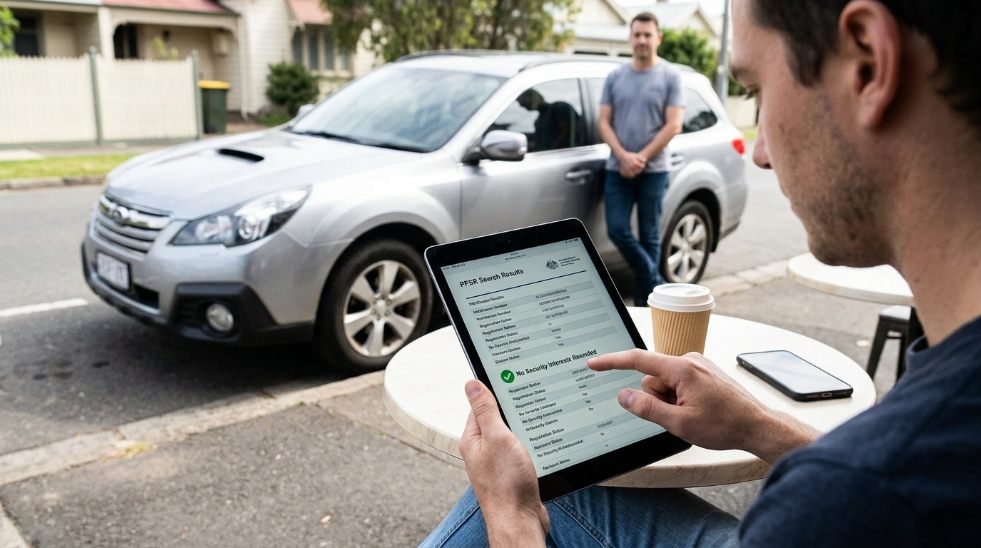
PPSR Check Explained: What to Check Before You Sell or Buy
Post by webuycars on 31 July 2026
A PPSR check takes two minutes and costs less than a coffee, yet it's the one step most private car sales skip entirely. If you're buying or selling, knowing what a PPSR check is and what it can flag saves you from a mess that's far more expensive to sort out later.
For something so cheap and quick, it's one of the few parts of buying or selling a car that's easy to get right.
What is a PPSR Check?
A PPSR check searches the Personal Property Securities Register, the official Australian government database that tells you whether a vehicle has money owing on it, someone has reported it stolen, or it's listed as written off.
Using the car's VIN, the check returns a certificate confirming the vehicle's current status, so buyers and sellers know exactly what they're dealing with before any money changes hands.
What a PPSR Check Shows You
Finance Owing (Encumbrance)
If a car still has a loan attached to it, the PPSR check will show a registered security interest. This means the lender has a legal claim over the vehicle until the debt is cleared, even if the car has already changed hands. It's one of the most common issues a PPSR check turns up, and thankfully, one of the easiest to sort out once you spot it.
Stolen Status
The register flags whether a vehicle has been reported stolen. Buying a stolen car, even unknowingly, means you can lose both the car and the money you paid for it, and there's often no way to recover your money if the seller has disappeared.
Written-Off Status (WOVR)
A PPSR check pulls through Written-Off Vehicle Register data, showing whether the car has previously been declared a statutory write-off (unrepairable) or a repairable write-off. Even if the car looks fine, write-off history can affect insurance and resale later on.
Registration Details
The certificate also confirms basic details like make, model and VIN, useful for cross-checking that the paperwork matches the car sitting in front of you. Mismatched details between the certificate and the physical vehicle are a red flag worth pausing on before you go any further.
How to Do a PPSR Check in Australia
Running a PPSR check yourself is straightforward:
Grab the car's VIN (usually on the compliance plate, dashboard, or in the vehicle's paperwork)
Head to ppsr.gov.au, the official government register
Enter the VIN and pay the $2 search fee
Get your certificate back instantly, confirming finance, stolen and write-off status
The official register searches only by VIN, not by number plate, so make sure you've got the correct identifier before you start. If a seller can't or won't give you the VIN, slow down and ask more questions before you commit.
PPSR vs REVS Checks
Plenty of people still search for a REVS check without realising the name has changed. REVS (Register of Encumbered Vehicles) was the old state-based system, replaced nationally by the PPSR in 2012.
If someone's told you to "get a REVS check" recently, a PPSR check is what they mean; it now covers the same ground, but on a single national register rather than separate state-by-state systems.
Why Sellers Should Run One Too
Most guides focus on PPSR checks from the buyer's perspective, but sellers benefit just as much.
If you’re selling a used car, running a check before listing means you can disclose any finance owing upfront, rather than a buyer discovering it mid-negotiation and walking away. It also earns trust quickly: a seller who hands over a clean certificate unprompted looks far more credible than one who gets cagey when asked.
This alone can be the difference between a quick sale and a listing that drags on for weeks. Buyers are increasingly running their own checks anyway, so getting ahead of it means you control the conversation instead of reacting to it.
What If Your Car Shows Finance Owing?
Finance owing won't stop you from selling; you just need to settle the loan as part of the sale. Your lender can provide a payout letter showing the exact amount owing and how to clear it.
Some sellers pay this out before listing; others arrange for settlement to happen at the point of sale, with the buyer's funds going partly or fully to the lender rather than the seller directly.
If you're wondering if you can sell a car under finance, the short answer is yes. The finance simply needs to be paid out through your lender before or during the transfer (which We Buy Cars can handle for you), so the buyer receives a clear title and there's no security interest left sitting against the car.
What If Your Car is on the Written-Off Register?
A written-off status won't automatically stop you from selling the car, though you'll need to disclose it in full. Buyers need to know whether it's a statutory or repairable write-off before they commit, since this affects insurability and future resale.
Some insurers won't cover a repairable write-off at all, or will only offer limited cover, so a buyer finding this out after the sale is a fast way to lose their trust and possibly face a legal dispute. Hiding this status is poor form, and it can expose you to legal issues down the track.
Selling to a Licensed Dealer
If you'd rather not manage PPSR checks, payout letters and negotiating with buyers yourself, a licensed dealer can handle all of it for you. We Buy Cars runs the necessary checks as part of the process and handles finance settlement directly with your lender where applicable.
The process starts with booking an assessment. Once your car's been assessed at our office, you'll get a proper, instant car offer, with quick payment if you accept.
For anyone looking at selling cars for cash in Brisbane, this removes most of the admin that trips up private sales. We’re one of the longer-running car buyers Brisbane has for sellers wanting a simple sale without chasing down paperwork themselves.
FAQs
$2 per search through the official ppsr.gov.au register. It's the same fee regardless of the vehicle's age, make or value.
No. The official register requires the VIN, not the number plate, so you'll need that before starting a search. Third-party sites sometimes offer plate lookups, but these aren't the official register and can be less reliable.
Ideally, run it as close to the sale date as possible. Finance and write-off status can change, so a check done weeks earlier may not reflect the car's current status at the time of sale.
Not directly. It shows written-off status if applicable, but it won't show minor accident history or repair records that didn't result in a formal write-off, so it's not a full history report.
It's the legal term for a registered claim over the vehicle, most commonly because there's still finance owing. It means someone other than the registered owner has a legal stake in the car until it's cleared in full.
Yes. The certificate is an official government record and is commonly relied on as evidence of a vehicle's status at the time of the search, including in disputes over undisclosed finance or write-off history.
We Buy Cars is the easiest & most efficient way to sell your used car.
If you've been telling yourself "I need to sell my car", you're in the right place! Our team are waiting for your enquiry. Book today and get prompt and secure payment for your used vehicle.