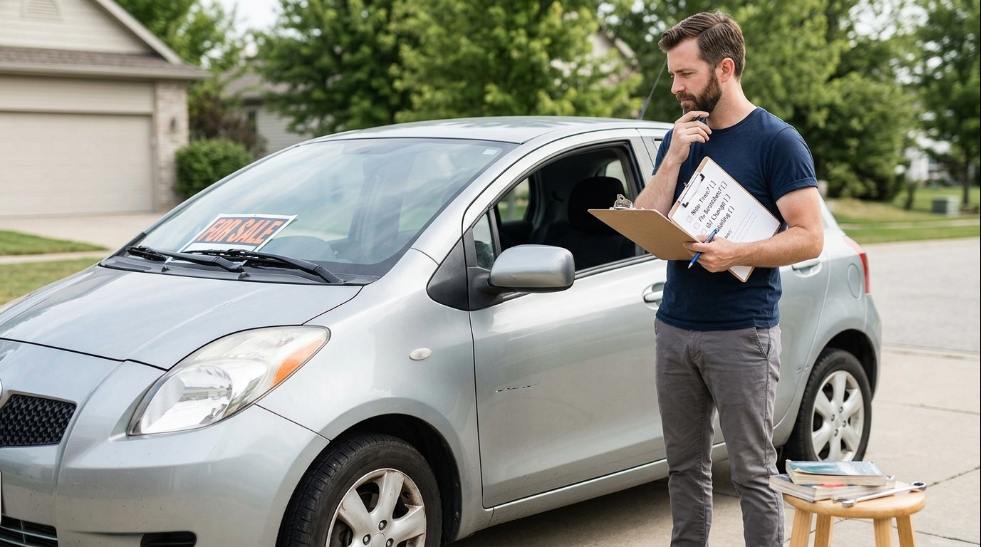
If you're staring down a repair quote and wondering should I fix my car before selling it, it really comes down to what's broken. Small stuff, such as dead bulbs, worn wipers, or a scratched bumper, almost always pays for itself. A failing transmission, engine trouble, or major accident damage almost never does.
Fixing the wrong things can see you easily spend $2,000 chasing $500 in extra value, whether you're planning to sell your car in Brisbane or anywhere else in the region.
Quick Tips: Fix Small, Skip Big
Here's the quick version if you're short on time:
Fix it if the repair costs under a few hundred dollars and it's something a buyer will notice in the first two minutes, like lights, wipers, a flat tyre, or a dirty interior.
Skip it if you're looking at engine, transmission or major accident repair. The cost rarely comes back to you in the sale price.
Get a valuation first. Knowing what your car is worth as-is tells you whether a repair is even worth considering.
Selling to a car-buying service sidesteps most of this decision entirely, since they buy cars in any condition.
The Break-Even Rule
Before you book anything in with a mechanic, it helps to understand why a $2,000 fault doesn't actually cost you $2,000 off your sale price.
Buyers don't value a fault at the full cost of fixing it. They value it at the risk and hassle it represents. A cracked headlight might knock $150 off an offer, even though replacing it costs $300, because the buyer knows it's a five-minute job for a professional workshop working at trade prices, not retail ones.
That gap between what you'd pay to fix something and what it actually costs you in the sale price is the whole game. As a rough rule: if the repair costs less than the value it adds (and takes less than a week to sort), it's worth doing. If it costs more than the value it adds, you're better off pricing the car accordingly and selling it as-is.
Repairs Worth Doing Before You Sell
These are the fixes that tend to earn their keep:
A proper detail and clean. A tidy interior and a washed exterior change a buyer's first impression more than almost anything else on this list, and it costs next to nothing.
Bulbs and wipers. A blown tail light or perished wipers make a car look neglected even when it isn't. Cheap parts, easy fix.
Borderline tyres. If your tyres are close to the legal limit, replacing them (or at least getting a wheel alignment sorted) can be worth it. Tyres are one of the first things any buyer checks.
Minor dents and scratches. A quick paintless dent repair or touch-up pen can lift a car's presentation without a full respray.
A recent service and fluid top-up. Buyers like to see recent oil changes and topped-up fluids on record.
Windscreen chips. A small chip can spread quickly into a crack, and a cracked windscreen is one of the more common reasons a car fails a safety inspection.
Repairs to Skip
On the flip side, some repairs almost never pay for themselves before a sale:
Engine or transmission work. These jobs run into the thousands, and buyers price in the risk of hidden issues regardless of what you've had done.
Structural accident repair. If the chassis or frame has been affected, no amount of bodywork will fully restore buyer confidence (or resale value).
A full respray. Unless the paint damage is severe, a complete respray rarely returns what it costs.
Aftermarket mods. Removing or "undoing" modifications to make a car more sellable is usually more trouble than it's worth. It's often easier to be upfront about them.
The QLD Wildcard: Repairs Just to Pass the Safety Certificate
If you're in Queensland, there's a wrinkle worth knowing about. A vehicle sold privately or through most other channels needs a current safety certificate (also called a roadworthy or RWC) before you transfer registration to the new owner, and inspection stations will fail a car for things like worn tyres, weak brakes or non-functioning lights.
A car that seems fine to drive might still need $500–$1,000 in repairs just to get a certificate issued, on top of anything you'd choose to fix for presentation.
There is a way around this, though. According to the Queensland Government's safety certificate guidelines, vehicles traded to or between licensed motor dealers do not require a safety certificate; only private sales and transfers do. So if you sell to a licensed dealer rather than privately, you skip the certificate and the repairs it might force. If you'd rather understand the full picture before deciding, our guide on selling your car without a roadworthy certificate breaks down exactly when an RWC is and isn't required.
Fix vs Sell As-Is: An Example
Say your car is worth around $9,000 in good condition, and a mechanic quotes $1,800 to fix a few issues – a windscreen chip, worn front tyres, and an overdue service.
Private sale, repaired first: You pay $1,800 upfront, wait a week or two for parts and bookings, then list the car. Best case, buyers pay closer to full value, but you've carried the cost and the time.
Private sale, as-is: You skip the repairs but need to disclose the issues (and likely still need an RWC before transfer, which may cover some of the same faults anyway). Buyers will factor in the faults when making their offer, often more heavily than the actual repair cost, because private buyers are risk-averse.
Sell to a car-buying service, as-is: You get an offer that already accounts for the car's condition, with no repair bills, no RWC to sort, no waiting for mechanic bookings. It's usually the fastest path to cash in hand, even if the headline number sits a little under what a patient private sale might fetch.
There's no single right answer here. It comes down to how much your time is worth against the extra dollars a repaired, privately sold car might bring in.
Presentation Beats Repairs
Before you spend a cent on mechanical work, spend an hour on presentation. A clean car with a complete service history and honest photos will outperform a mechanically perfect car that looks neglected in listing photos. It's the highest-return "fix" available, and it's free.
Test the As-Is Price First
Whatever you decide, get a number before you book a mechanic. A free car valuation or an instant offer on your car as it currently sits tells you exactly what you're working with, so any repair decision is based on real numbers, not estimations.
If the offer already feels fair, there's a good chance the repair bill isn't worth chasing. That's what We Buy Cars is here for. We assess any make, model or condition and make a fair offer on the spot, without asking you to fix a thing first.
Ready to find out what your car's worth as-is? Get a free car valuation or sell your car for cash in Brisbane with We Buy Cars. Any make, model or condition considered.
FAQs
Usually, yes. For minor cosmetic marks, a touch-up or paintless dent repair is cheap and lifts the car's first impression, which matters more than the scratch itself ever did.
A recent service and topped-up fluids are worth having on record, especially for a private sale. It's low-cost reassurance for a buyer, even if it doesn't dramatically change the sale price.
If you're selling privately or need to transfer registration, yes. Any faults an inspector flags must be fixed before a safety certificate is issued. Selling to a licensed dealer instead means a roadworthy isn't required.
Not necessarily less than you'd net after paying for repairs yourself. A reputable car buying service factors condition into a fair offer, without the mechanic's bill, the wait, or the guesswork of pricing repairs into a private listing.
Yes, always. Being upfront about a car's condition, whether you're selling privately or to a buying service, helps avoid disputes later and tends to make the process faster.
We Buy Cars is the easiest & most efficient way to sell your used car.
If you've been telling yourself "I need to sell my car", you're in the right place! Our team are waiting for your enquiry. Book today and get prompt and secure payment for your used vehicle.